What to Do When Your Toilet Overflows
Stop the water in seconds, then figure out the cause.
An overflowing toilet can damage floors and ceilings fast. Here's how to get it under control.
1. Stop the water
Find the shutoff valve on the wall behind the toilet, near the floor. Turn it clockwise until it stops.
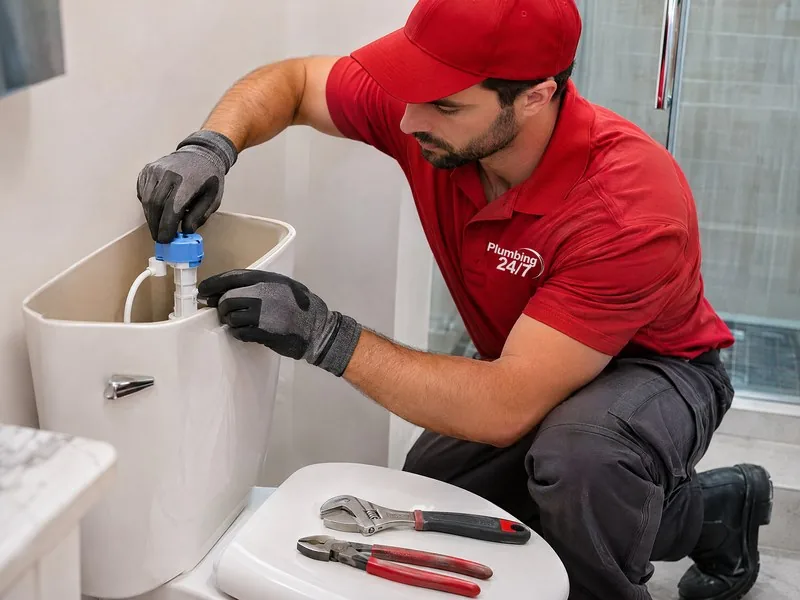
If the valve is stuck, lift the tank lid and press the rubber flapper at the bottom of the tank closed. You can also lift the float to stop the tank from refilling.
2. Don't flush again
Flushing a blocked toilet adds more water to the bowl.
3. Clean up safely
Soak up water with old towels, wear gloves and disinfect the area afterwards. If water has leaked through the floor, check the ceiling below.
4. Try a plunger
A flange plunger (with an extended rubber flap) works best for toilets. Use steady pushes and pulls without splashing.
When to request help
- Plunging doesn't clear it
- Water backs up into the tub or shower when you flush
- Several drains are slow or blocked
- Water is leaking around the base of the toilet
- It's the only toilet in your home
These can point to a deeper blockage or a failed seal. Request emergency toilet repair any time.
Preventing overflows
Only flush toilet paper. Wipes, paper towels, cotton swabs and sanitary products are common causes of blockages.
Need help right now?
Emergency requests are accepted 24/7. We'll contact you as quickly as possible.
Related services
Service areas
This article is general guidance. Every situation is different — when in doubt, put safety first and contact a qualified professional. In an emergency involving danger to life, call 911.